


Everyone has seen those eye-catching social media ads popping up in their feeds and it feels like brands are everywhere at once. But most people have no idea that Facebook alone offers over 1,000 unique targeting options for advertisers. This sounds overwhelming and complicated at first, yet the real secret is that you do not need a massive budget or a marketing degree to run successful ads. The biggest wins actually come from understanding simple steps that most people skip entirely.
Quick Summary
| Takeaway | Explanation |
|---|---|
| Select the right platform | Choose social media platforms based on audience demographics and advertising objectives to maximize effectiveness. |
| Utilize advanced targeting | Leverage detailed targeting options like behaviors and interests for personalized ad campaigns. |
| Create compelling visuals | Invest in high-quality imagery and storytelling to grab audience attention and reinforce brand identity. |
| Monitor and optimize continuously | Regularly track performance metrics and adjust campaigns to improve results and reduce costs. |
| Set clear campaign objectives | Define specific goals such as brand awareness or conversions before launching ads to guide strategy effectively. |
Understanding Social Media Ad Platforms
Creating social media ads requires a strategic understanding of different digital platforms and their unique advertising ecosystems. Each social media platform offers distinct features, audience demographics, and targeting capabilities that can significantly impact your marketing effectiveness.
Platform Diversity and Strategic Selection
Selecting the right social media platform is crucial when creating social media ads. Our comprehensive guide to marketing strategies can help you navigate this complex landscape. Different platforms attract varied audiences and offer unique advertising formats. For instance, research from the University of Missouri Extension highlights that platforms like Facebook, Instagram, LinkedIn, and Twitter each serve specific marketing objectives.
Facebook remains the most versatile platform, offering extensive demographic targeting options. Instagram excels in visual storytelling, making it ideal for brands with strong visual content. LinkedIn specializes in B2B marketing, while Twitter provides real-time engagement opportunities. Understanding these nuances allows marketers to craft more precise and effective advertising strategies.
To help you choose the most effective platform for your advertising objectives, here’s a comparison of key social media platforms, their strengths, and the primary marketing use-cases they serve:
| Platform | Strengths | Best For |
|---|---|---|
| Versatile demographic targeting | General consumer marketing, broad audiences | |
| Visual storytelling, high engagement | Lifestyle brands, visually-driven content | |
| Professional audience, B2B focus | Business services, B2B, professional networking | |
| Real-time engagement, trending topics | Time-sensitive updates, news, quick interactions |
Advertising Ecosystem and Business Models
Social media platforms generate revenue primarily through targeted advertising. According to the National Academies Press, these platforms leverage user data to create sophisticated advertising solutions. This means marketers can access incredibly granular targeting options based on user behaviors, interests, demographics, and online interactions.
The advertising ecosystem encompasses three primary media types: organic, earned, and paid media. Paid social media advertising allows businesses to amplify their reach beyond organic content, ensuring messages are seen by a broader, more targeted audience. Each platform offers unique ad formats such as image ads, video ads, carousel ads, and sponsored content, enabling marketers to choose the most appropriate format for their campaign objectives.
Technical Targeting and Performance Metrics
Modern social media advertising platforms provide advanced targeting capabilities that go far beyond basic demographic information. Marketers can now target users based on very specific criteria like recent purchase behaviors, life events, interests, and even potential future actions. University of Minnesota’s research emphasizes the importance of setting clear campaign goals and understanding your target audience before launching any advertising campaign.
Performance tracking is another critical aspect of social media advertising. Platforms offer comprehensive analytics that measure engagement rates, click-through rates, conversion rates, and return on ad spend. These metrics enable marketers to continuously refine their strategies, optimize ad spending, and improve overall campaign performance.
Successful social media advertising requires a nuanced understanding of platform capabilities, audience behaviors, and strategic targeting. By carefully selecting platforms, understanding their unique characteristics, and leveraging advanced targeting options, businesses can create more effective and efficient advertising campaigns that deliver tangible results.
Key Elements of Effective Social Media Ads
Creating compelling social media ads requires a strategic blend of visual appeal, persuasive messaging, and precise targeting. While technological platforms provide the infrastructure, the success of an ad ultimately depends on its fundamental design elements and ability to connect with the target audience.
Visual Design and Storytelling
Our guide to marketing strategies highlights the critical role of visual design in social media advertising. According to research from the Journal of Extension, high-quality images and authentic storytelling are crucial for capturing audience attention. Visual elements should be crisp, professionally designed, and aligned with your brand’s aesthetic.
Effective social media ads typically incorporate several key visual components: clear, high-resolution images or videos, consistent color schemes that reflect brand identity, and strategic use of negative space to draw focus to the primary message. Typography also plays a significant role, with font choices that are legible and aligned with the brand’s personality. Designers must balance creativity with clarity, ensuring that the visual narrative communicates the core message quickly and effectively.
Compelling Copy and Call-to-Action
The textual content of a social media ad is equally important as its visual design. Copy must be concise, engaging, and tailored to the specific platform’s audience. This means understanding the communication style and expectations of users on different social media networks. A message that works on LinkedIn might not resonate on Instagram.
A powerful call-to-action (CTA) is essential for driving user engagement. CTAs should be direct, action-oriented, and create a sense of urgency or value. Phrases like “Limited Offer,” “Discover Now,” or “Get Instant Access” can motivate users to take the desired action. The placement and design of the CTA button are crucial, ensuring it stands out without appearing aggressive or intrusive.
Audience Targeting and Personalization
The most visually stunning ad will fail if it does not reach the right audience. Advanced social media platforms offer sophisticated targeting options that allow marketers to narrow their audience based on demographics, interests, behaviors, and even past interactions. Successful ads leverage these tools to create highly personalized advertising experiences.
Personalization goes beyond basic demographic segmentation. It involves understanding user pain points, aspirations, and preferences. By crafting messages that speak directly to specific audience segments, advertisers can significantly improve engagement rates. This might involve creating multiple ad variations tailored to different audience subgroups, each with slightly modified messaging or visuals that resonate more closely with their specific needs.
Effective social media advertising is a nuanced art that combines creative design, strategic messaging, and precise targeting. By focusing on these key elements – compelling visuals, persuasive copy, and audience-specific personalization – marketers can create ads that not only capture attention but also drive meaningful user action.
Step-by-Step Process for Creating Social Media Ads
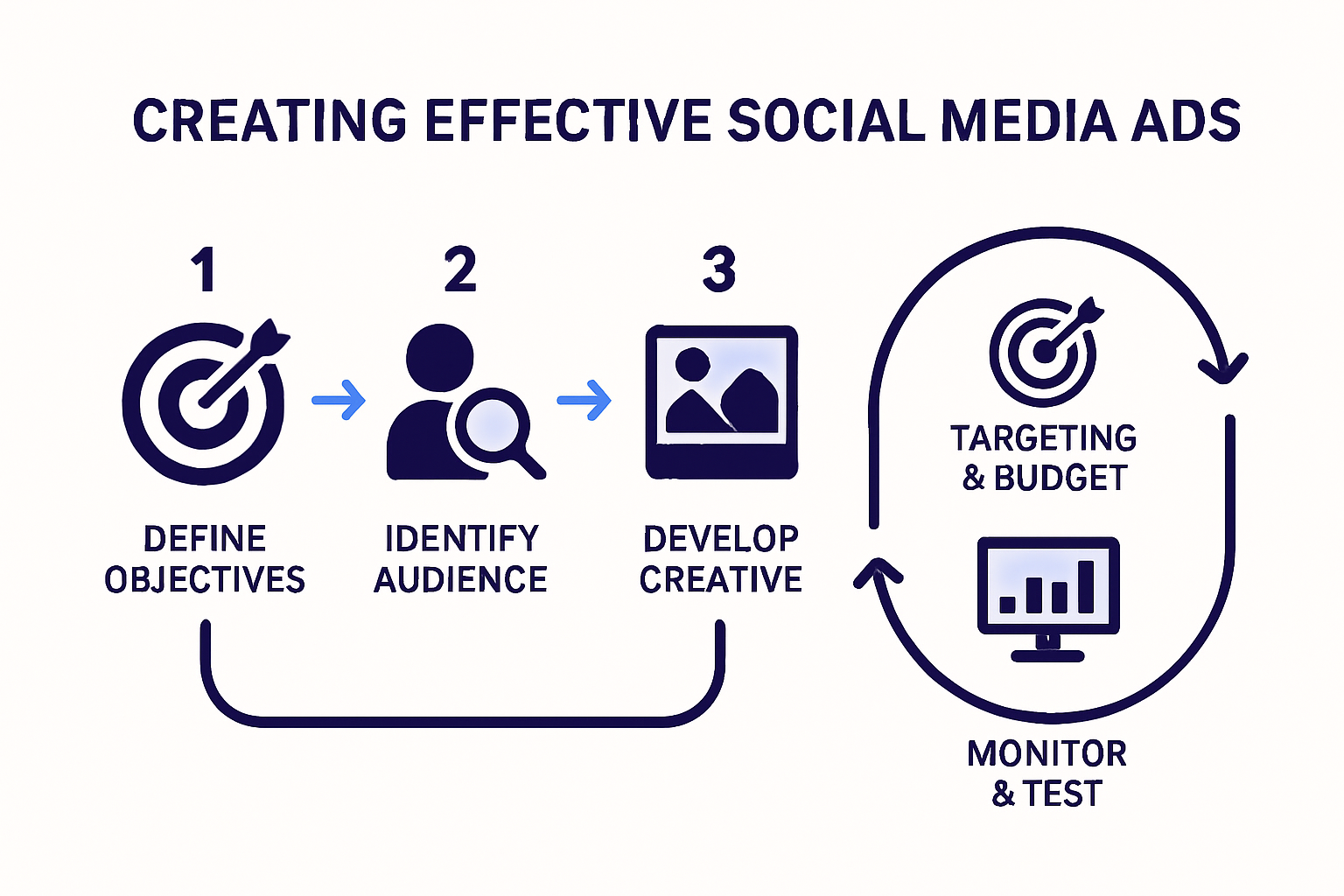
Creating effective social media ads requires a systematic approach that transforms strategic thinking into actionable marketing campaigns. Our guide to growing social media presence can provide additional context for this comprehensive process.
Defining Campaign Objectives and Audience
The foundation of any successful social media ad campaign begins with crystal-clear objective setting. According to the U.S. Small Business Administration, marketers must precisely define their marketing goals before launching any advertising initiative. These objectives might include brand awareness, lead generation, website traffic, or direct sales conversion.
Audience identification is equally critical. Marketers must develop detailed audience personas by analyzing demographic information, interests, behaviors, and potential pain points. This involves leveraging platform-specific analytics tools to understand user characteristics and create highly targeted advertising strategies. Understanding your audience allows for more personalized and effective ad messaging.
Ad Creation and Technical Setup
Research from the Model Systems Knowledge Translation Center provides comprehensive guidance on the technical aspects of ad creation. The process involves several crucial steps:
- Account Preparation: Create a dedicated business ad account on your chosen platform
- Creative Development: Design compelling visuals and craft engaging ad copy
- Targeting Configuration: Set up precise audience targeting parameters
- Budget Allocation: Determine appropriate spending limits and bidding strategies
Each platform offers unique ad creation tools. Facebook Ads Manager, for instance, provides robust features for designing, testing, and launching advertisements. Marketers should familiarize themselves with platform-specific creative guidelines to ensure ad compliance and optimal performance.
Monitoring, Testing, and Optimization
Successful social media advertising is an iterative process that requires continuous monitoring and refinement. CARE’s advertising guidelines emphasize the importance of tracking key performance indicators such as click-through rates, engagement metrics, and conversion rates.
A/B testing is a powerful technique for optimizing ad performance. This involves creating multiple ad variations with slight differences in visuals, copy, or targeting to determine which version generates the best results. Marketers should be prepared to:
- Analyze performance data regularly
- Adjust targeting parameters
- Reallocate budget based on ad performance
- Experiment with different creative approaches
The process of creating social media ads is not a one-time event but a dynamic, ongoing strategy. By maintaining a systematic approach to objective setting, creative development, and continuous optimization, marketers can develop increasingly effective advertising campaigns that deliver meaningful results across social media platforms.
For quick reference, here’s a summary table of the essential steps involved in creating a social media ad campaign, based on the step-by-step process discussed above:
| Step | Description |
|---|---|
| Define Campaign Objectives | Set clear goals (e.g., brand awareness, conversions) |
| Identify Target Audience | Analyze demographics, interests, behaviors |
| Prepare Account | Set up or update business ad account on chosen platform |
| Develop Creative Assets | Design visuals, write compelling ad copy |
| Configure Targeting & Budget | Specify audience, allocate budget, select bidding strategy |
| Launch Ad Campaign | Deploy campaign on chosen social media channel |
| Monitor & Test | Track KPIs and run A/B tests for ongoing improvements |
| Optimize & Refine | Adjust targeting, creative, and spend based on results |
Measuring and Optimizing Ad Performance
Measuring and optimizing social media ad performance is a critical component of successful digital marketing strategies. While creating compelling ads is essential, understanding their real-world impact through comprehensive performance analysis enables marketers to refine and improve their approach continuously.
Key Performance Metrics and Goal Setting
Our strategies for digital growth emphasize the importance of strategic performance tracking. According to research from the University of Rochester, marketers should establish SMART goals – Specific, Measurable, Achievable, Relevant, and Time-bound – when evaluating ad performance.
Essential metrics for social media ad performance include:
- Reach: Total number of unique users who viewed the ad
- Impressions: Total number of times the ad was displayed
- Engagement Rate: Percentage of users who interacted with the ad
- Click-Through Rate (CTR): Proportion of viewers who clicked on the ad
- Conversion Rate: Percentage of users who completed a desired action
- Cost Per Click (CPC): Total advertising spend divided by number of clicks
By tracking these metrics, marketers can gain insights into their ad’s effectiveness and identify areas for improvement. Each platform offers native analytics tools that provide detailed performance breakdowns, enabling data-driven decision making.
Advanced Analytics and Optimization Techniques
eCornell’s research on social media marketing highlights the importance of linking campaign objectives to specific outcomes. Advanced optimization techniques involve continuous testing and refinement of ad elements.
A/B testing remains a powerful strategy for improving ad performance. This method involves creating multiple ad variations with slight differences in elements like headline, image, call-to-action, or targeting parameters. By comparing the performance of these variations, marketers can systematically identify the most effective approaches.
Machine learning and AI-powered analytics tools are transforming performance optimization. These technologies can automatically suggest improvements, predict potential performance, and provide granular insights into audience behavior. Marketers can leverage these tools to make more informed decisions about ad strategy and resource allocation.
Continuous Improvement and Adaptive Strategies
Successful social media advertising is not a static process but a dynamic, iterative journey. Regular performance review and willingness to adapt are crucial. This means:
- Reviewing metrics weekly or bi-weekly
- Identifying underperforming ads quickly
- Reallocating budget from low-performing to high-performing ads
- Experimenting with new targeting options
- Staying updated with platform algorithm changes
Marketers should also maintain a holistic view of performance. While individual ad metrics are important, they should be evaluated in the context of broader marketing objectives and overall business goals.

Optimizing social media ad performance is a nuanced art that combines data analysis, creative thinking, and strategic adaptation. By embracing a systematic approach to measurement, testing, and continuous improvement, marketers can develop increasingly effective advertising campaigns that deliver meaningful results and drive business growth.
Frequently Asked Questions
What are the key steps in creating a social media ad?
The key steps include defining campaign objectives, identifying your target audience, preparing your ad account, developing creative assets, configuring targeting and budget, launching the campaign, monitoring performance, and optimizing for better results.
How can I select the right social media platform for advertising?
Choose a platform based on your target audience demographics and the type of content you plan to share. For instance, Facebook is great for general consumer marketing, Instagram excels in visual storytelling, LinkedIn is best for B2B marketing, and Twitter offers real-time engagement opportunities.
What metrics should I track to measure the success of my social media ads?
Track key metrics such as reach, impressions, engagement rate, click-through rate (CTR), conversion rate, and cost per click (CPC) to evaluate the effectiveness of your ads and identify areas for improvement.
How do I optimize my social media ad campaigns?
Optimize your ad campaigns by conducting A/B testing, adjusting targeting options, reallocating budget from low-performing to high-performing ads, and continuously reviewing performance metrics to refine your strategy.
Turn Your Social Media Ad Strategy Into Real Growth
You have just learned how crucial it is to choose the right platform, master targeting, and track performance for your social media ads. But putting these strategies into action can feel overwhelming—especially when you need results fast, have limited time, or worry about wasting money optimizing every campaign detail. If finding a trustworthy, fast, and affordable way to boost your presence is holding you back, you’re not alone. This is where many give up before seeing the impact they want.
Why settle for complicated tools or guesswork? Join over 200,000 satisfied clients who have transformed their ad results with SMM OWL’s easy-to-use panel. Instantly boost your followers, engagement, and campaign reach across Instagram, Facebook, Twitter, and more. Get 24/7 support and rapid order processing so you can finally focus on growing, not troubleshooting. Ready to put the strategies from this guide into motion? Get started now with SMM OWL and experience the difference in your next social media ad campaign.