
If you write fiction for Kindle Direct Publishing you already know that the real bottleneck is not ideas. The real bottleneck is turning ideas into drafts quickly enough to publish regularly. A new idea that sits in your notes app does not sell books. A finished and edited short story does. The gap between saying “I have an idea” and saying “I have a draft” is the problem that AI Where You Work Short Story Engine claims to solve. That problem is why this WarriorPlus launch is drawing attention from self‑publishers who want a production pipeline. In this AI Where You Work Short Story Engine Review we will examine whether the tool really fulfills that promise.
This AI Where You Work Short Story Engine Review is not a rewrite of the sales page. It is a breakdown of what’s really in the offer, including every upsell and its exact price. It also gives a look at what an AI drafting tool, like this can do and what it cannot do for your writing process.
By the end you will know whether the AI Where You Work Short Story Engine fits how you work what it will cost you if you go beyond the front‑end offer and what to expect when you open the dashboard for the time.
Get ShortStory Engine + $1,000+ Bonus
Ready to speed up your short-fiction publishing workflow? Get ShortStory Engine and claim the exclusive bonus package worth $1,000+.
- ShortStory Engine core software
- Exclusive bonus package worth $1,000+
- AI-powered short-story creation workflow
- Tools designed for KDP-focused publishing
⭐ Claim the bonus package while the current offer is available.
Table of Contents
THE PROBLEM: WHY A TOOL LIKE THIS EXISTS
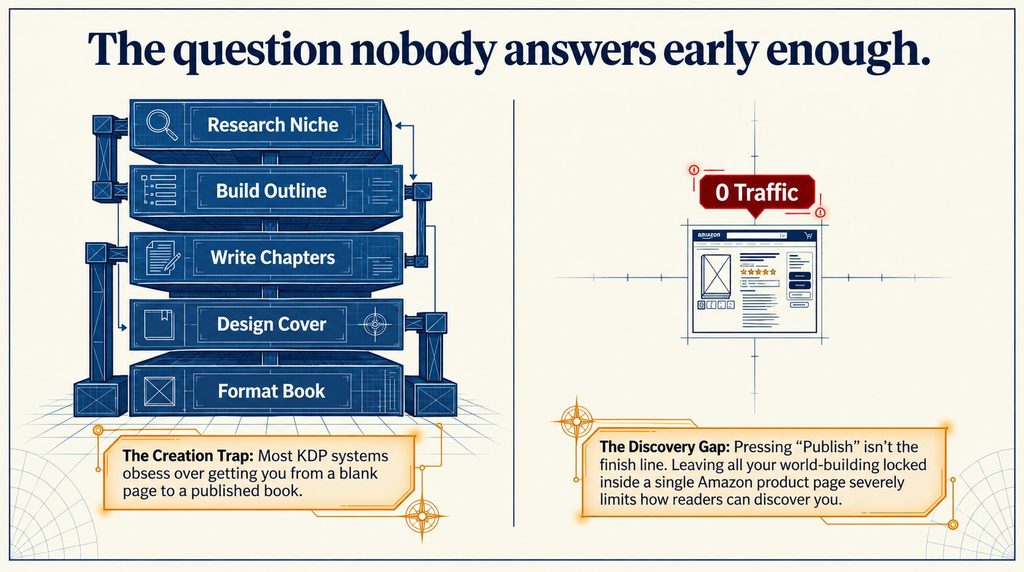
Short fiction has an economics. A single story rarely makes money on its own but a large consistent catalog of stories can build a real KDP income stream over time. If you can produce enough of them without burning out. The traditional process looks like this: come up with a premise outline it write a draft revise it format it for KDP write the metadata (title, description, keywords, categories) design or source a cover and publish. Repeat that dozens or hundreds of times and the outlining and first-draft stage is usually where writers lose the time relative to the value it produces.
For anyone considering an AI Where You Work Short Story Engine Review production bottleneck’s one of the most important things to evaluate. That is the gap AI Where You Work. Short Story Engine is aimed at. AI Where You Work. Short Story Engine does not try to replace the writer. AI Where You Work. Short Story Engine tries to compress the most repetitive part of the process (blank page to structured first draft) so more of your time goes into the parts that actually require your judgment: editing for voice tightening plot logic and making the story genuinely good.
In this AI Where You Work Short Story Engine Review is a distinction because faster drafting does not automatically mean better finished fiction. This is also why the tool is positioned around KDP publishing rather than as a generic ‘AI writer.’ Generic AI writing tools tend to produce content that’s usable for blog posts or marketing copy but poorly suited to narrative structure. Pacing, scene logic and story arcs need different handling than a listicle does. A tool built around short story generation at least in theory should understand that structure better, than a general-purpose AI writing assistant.
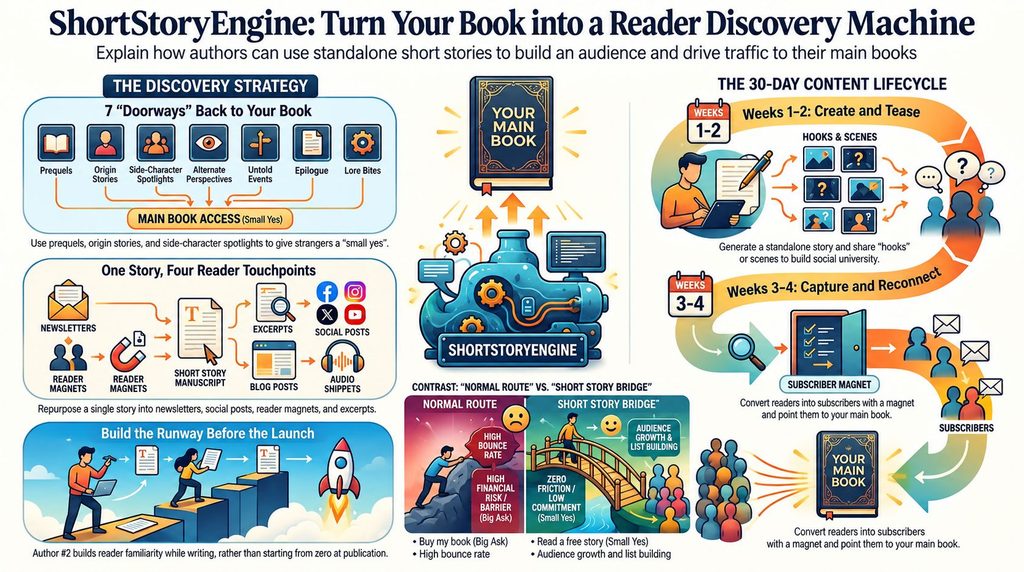
WHAT IS AI WHERE YOU WORK – SHORT STORY ENGINE?
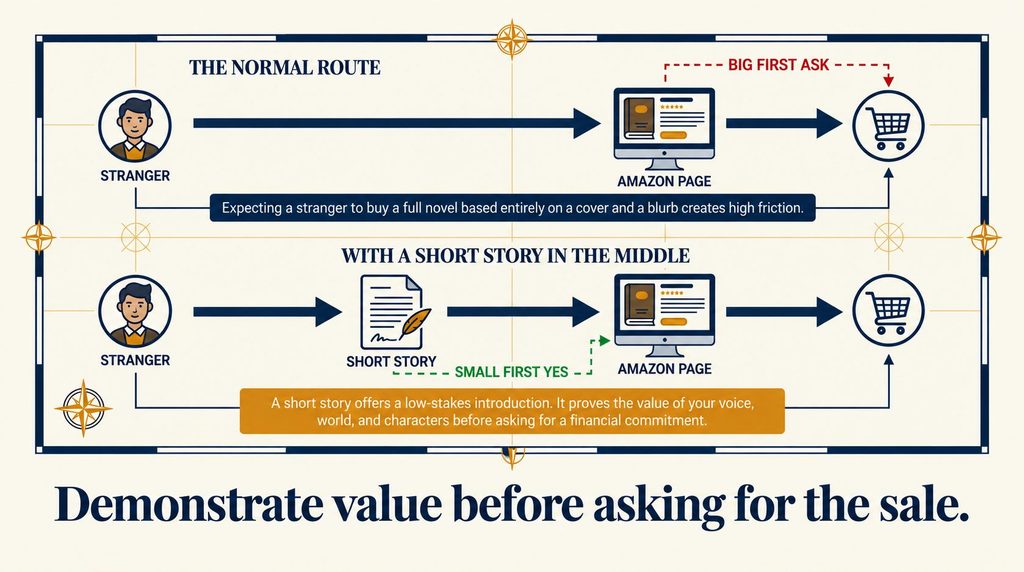
AI Where You Work Short Story Engine is a tool hosted by WarriorPlus that is made for fiction writers, independent authors and content creators who want to create short story drafts using AI. The focus is on helping with the Amazon KDP publishing process. Unlike a chatbot-style writing assistant this tool is designed specifically for the short story format. It includes steps like entering a premise creating an outline expanding scenes and formatting the output in a way that’s suitable for KDP.
The name “AI Where You Work” implies that the tool is meant to fit into your writing process instead of making you change how you work completely. You provide the story idea. The tool takes care of the structure around it.
This product is sold on WarriorPlus, a marketplace that has been around since 2006. It is popular with internet marketers and software sellers for launching products. This is important because WarriorPlus transactions use PayPal or card payments with buyer protection. WarriorPlus products usually have a funnel structure meaning there is a front-end product followed by upgrades called OTOs. The Short Story Engine follows this model. Knowing the funnel is important before deciding how much you are willing to spend. This is a point, in any AI Where You Work Short Story Engine Review.
HOW AI WHERE YOU WORK – SHORT STORY ENGINE WORKS
Based on the available product information and how tools in this category are typically built, the general workflow looks like this:
- You provide a story premise, prompt, or starting idea — this can be as simple as a one-line concept or as detailed as a character and setting description.
- The software generates a structural outline based on your input, breaking the premise into a sequence of scenes or story beats.
- It expands those beats into a full draft, section by section, rather than generating the entire story in one uncontrolled pass.
- The output is formatted with KDP publishing in mind, which typically means the tool also assists with metadata such as titles, descriptions, or categorization suited to Amazon’s short-fiction categories.
- From there, the draft is meant to be reviewed, edited, and refined by you before publishing — the tool is positioned as a first-draft accelerator, not a finished-manuscript generator.
The core idea behind this kind of prompt-to-outline-to-draft pipeline is that it keeps the AI from drifting off-structure the way a single giant prompt often does. Feeding an AI a two-sentence premise and asking for “a complete short story” tends to produce something shapeless. Breaking it into outline, then scene expansion, generally produces a more usable draft — which is presumably the reasoning behind building the tool this way rather than as a single-shot generator.
KEY FEATURES AND WHAT YOU ACTUALLY GET
Prompt-to-Draft Generation
This is the core function: turning a short premise into a structured draft rather than a wall of disconnected text. For a writer, the practical benefit is skipping the slowest part of the blank-page problem — you’re editing and shaping a draft instead of generating one from nothing.
Speed-Focused Workflow
The entire pitch of the tool rests on time saved during the outline-to-first-draft phase. If you currently spend hours getting from idea to a rough draft, a tool like this is meant to compress that into minutes, leaving your time budget for editing and voice work instead.
KDP-Oriented Output
Unlike a general AI writing assistant, this tool’s stated focus on KDP metadata and formatting matters if your goal is specifically self-publishing short fiction on Amazon rather than writing for a blog, magazine submission, or personal project. This narrower focus is either a strength (if KDP is your actual use case) or irrelevant (if it isn’t).
Editable AI Drafts, Not Finished Manuscripts
Let us be clear about this because it is the important expectation to set correctly. AI‑generated fiction drafts, from any tool usually need a human editing pass to smooth phrasing tighten pacing and give a distinct voice. Short Story Engine says the output is a starting point and independent reviewers say the same: the drafts are fast and easy to work with but early passes often use clichéd phrasing.
Those drafts improve a lot when the prompts are refined and a light editing pass is done. That is a feature of AI drafting tools, not a flaw unique to this product. It does mean you should not buy this tool expecting it to produce text straight from the generator. For anyone reading an AI Where You Work Short Story Engine Review knowing the difference, between drafting and finished publish‑ready fiction is very important.
MY EXPERIENCE
To be transparent this review is based on the available offer details the funnel structure shown at checkout and independent third-party commentary on the tool. It is not based on a multi‑day test of the software. Rather than fabricate a “I used it for a week and here is what happened” narrative it is more useful to walk through what’s verifiable and let you weigh it accordingly. This approach is especially important in an AI Where You Work Short Story Engine Review, where separating confirmed information from assumptions helps you make an informed decision.
What is verifiable: the funnel structure and pricing (detailed below) the tool’s stated focus on KDP‑oriented short story generation and one independent third‑party evaluation’s account of output quality – fast and structurally usable with a caveat about clichéd phrasing in early passes that improved with sharper prompting and editing.
What is not independently verifiable from information: exact output length limits, specific genre coverage whether the tool supports series continuity across multiple stories, the underlying AI model it is built on and how it performs on more complex or unusual premises. If any of these details are critical to your buying decision it is worth checking the sales page or reaching out to the vendor directly before purchasing since specifics, like model choice and output limits can change between launches and are not always spelled out clearly on the checkout page.
WHAT I LIKED
The focus is genuinely narrow and useful. Of claiming to be a do‑everything AI writing suite the tool is designed only for short story generation for KDP. That is a design choice—tools that are narrower usually give more steady purpose‑built results than general tools because the prompts and structure can be fine‑tuned for one job rather than many. This focused approach is a point worth thinking about in an AI Where You Work Short Story Engine Review.
The front‑end price is reasonable. For $27 for the core tool the initial cost is low enough that you can test if the workflow fits your process without a financial commitment especially when compared to ongoing subscription‑based AI writing tools that can cost $20 to $50 or more every month forever.
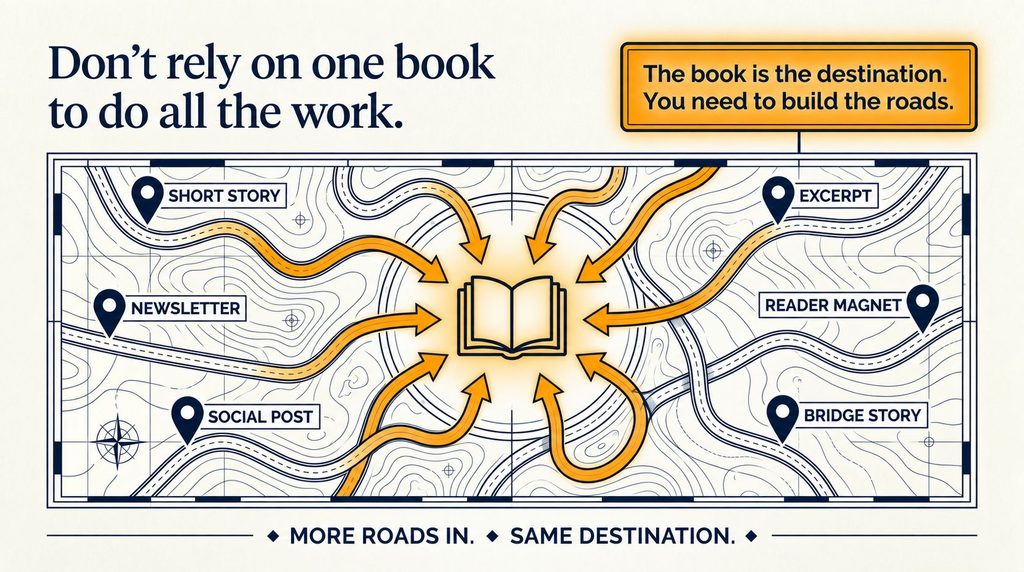
The funnel delivers a complete publishing stack if that is what you need. With the cover design tool, the prompt vault, the submission assistant and the newsletter tool the whole funnel covers most of the steps in a short‑fiction publishing workflow, beyond writing. For someone who wants a single‑vendor stack of putting together separate tools that is real convenience if you are ready to pay for it.
Get ShortStory Engine + $1,000+ Bonus
Ready to speed up your short-fiction publishing workflow? Get ShortStory Engine and claim the exclusive bonus package worth $1,000+.
- ShortStory Engine core software
- Exclusive bonus package worth $1,000+
- AI-powered short-story creation workflow
- Tools designed for KDP-focused publishing
⭐ Claim the bonus package while the current offer is available.
PRICING: THE FULL FUNNEL BREAKDOWN
Unlike many reviews that only mention the front-end price, here is the complete offer structure as listed at checkout, so you know exactly what you’re deciding on before you click through:
| Type | Product | Price | Billing |
|---|---|---|---|
| Front End | ShortStory Engine | $27.00 | One-time |
| Upsell | Book Cover Studio (bundled option) | $15.00 | One-time |
| Upsell | AI Extensions White Label Rebrander Club – Annual | $197.00 | Annual |
| Upsell | AI Extensions White Label Rebrander Club – Monthly | $47.00 | Recurring |
| Upsell | AI Extensions White Label Rebrander Club – Onetime | $347.00 | One-time |
| Upsell | AI Where You Work: Prompt Vault | $47.00 | One-time |
| Upsell | Book Cover Studio (standalone) | $37.00 | One-time |
| Upsell | BrowserPilot AI Workflow DFY Library | $37.00 | One-time |
| Upsell | Newsletter Pilot | $27.00 | One-time |
| Upsell | PublisherPilot Pack 3-in-1 Bundle | $67.00 | One-time |
| Upsell | SelfPublish Pilot AI | $37.00 | One-time |
| Upsell | ShortStory Pilot | $27.00 | One-time |
| Upsell | ShortStoryEngine Submission Assistant | $27.00 | One-time |
| Upsell | ShortStoryEngine Submission Assistant Buyout | $67.00 | One-time |
I find that the practical takeaway is simple: if you only want the core writing tool $27 is your cost. If you want the publishing stack – cover design, prompt templates, a rebrander license, submission tools and a newsletter component – the total spend can easily exceed $500 once every upsell is added.
Most buyers end up in between picking up one or two add-ons that fill a gap, in their own workflow – a cover tool if you do not already have one, for example – and leaving the rest behind. For anyone reading an AI Where You Work Short Story Engine Review the key is to decide which features you actually need before you go through the upsell funnel. The AI Where You Work Short Story Engine Review reminds us that careful choice saves money and time.
Refund terms are set by the vendor through the WarriorPlus platform and can vary by launch, so confirm the current policy on the checkout page before purchasing rather than assuming a specific refund window applies.
WHO SHOULD CONSIDER THIS TOOL
Active KDP short-fiction publishers. If you’re already publishing short stories on Amazon and your bottleneck is getting from idea to first draft fast enough to maintain a consistent release schedule, this tool is squarely built for your use case. For anyone considering an AI Where You Work Short Story Engine Review, this is arguably the clearest audience fit.
Writers comfortable editing AI output. If you see AI-generated text as a starting point you’ll shape into your own voice — rather than a finished product — you’re likely to get real value out of the speed gains here.
Anyone testing whether AI-assisted fiction writing fits their process. Because the front-end price is low, it’s a reasonably low-risk way to find out whether this kind of workflow actually saves you time, without committing to a full software stack up front.
WHO SHOULD SKIP THIS TOOL
Writers looking for fully automated, hands-off publishing. If your goal is to generate and publish without an editing step, this isn’t the right fit — and honestly, no current AI writing tool is a responsible choice for that kind of hands-off approach if you care about reader trust and long-term reputation. This is an important point to keep in mind when evaluating an AI Where You Work Short Story Engine Review.
Writers outside the KDP short-fiction niche. If you’re writing novels, screenplays, or non-KDP content, a tool this specifically scoped to short-form KDP publishing may not translate well to your format, and a more general-purpose AI writing assistant might serve you better.
Budget-conscious buyers who can’t commit to the full stack. If you’re likely to feel pressure to buy through the entire funnel to “get the complete system,” it may be safer to skip the offer entirely rather than risk overspending on upsells you won’t use.
AI WHERE YOU WORK – SHORT STORY ENGINE VS ALTERNATIVES
Compared with general-purpose AI writing assistants (the kind used broadly for blog posts, emails, and marketing copy), Short Story Engine’s advantage is its narrower focus on narrative structure specifically for short fiction — a general tool isn’t built with scene-by-scene story logic or KDP formatting in mind, and you’d typically need to do more manual structuring yourself to get comparable results. For an AI Where You Work Short Story Engine Review, this workflow difference is one of the more useful factors to consider.
Compared with hiring a ghostwriter or freelance author for short fiction, the AI-based approach is dramatically cheaper and faster, but it shifts the effort from “someone else writes it” to “you edit and refine what the AI generates.” For writers who enjoy and are skilled at editing but slower at first-draft generation, that tradeoff can work well. For writers who dislike the editing process itself, it may not solve the actual bottleneck.
Exact feature-by-feature specifications for competing AI story-generation tools weren’t independently verified for this review, so rather than make unsupported superiority claims, the fair comparison point is workflow philosophy: broad AI assistants require you to do more manual structuring, while a narrowly scoped tool like this one builds structure in — the tradeoff being less flexibility if your writing needs fall outside short-form KDP fiction. This distinction is also important to consider when evaluating an AI Where You Work Short Story Engine Review.
VALUE AND ROI LOGIC
The realistic value proposition here isn’t “this tool will make you money” — no honest review should claim that about an AI writing tool, and no legitimate one should promise guaranteed income. The more grounded way to think about value is time saved on a specific bottleneck: if outlining and first-drafting are genuinely the slowest part of your short-story production process, and you can reliably shave meaningful time off that stage while still doing a real editing pass, the $27 front-end cost can pay for itself quickly in reclaimed writing time. That’s the practical value to consider in an AI Where You Work Short Story Engine Review.
If your bottleneck is actually somewhere else — editing speed, cover design, marketing, or simply finding time to write at all — this specific tool addresses less of your actual problem, and the upsells (which cover some of those adjacent areas) become more or less relevant depending on which gap you’re trying to close.
Get ShortStory Engine + $1,000+ Bonus
Ready to speed up your short-fiction publishing workflow? Get ShortStory Engine and claim the exclusive bonus package worth $1,000+.
- ShortStory Engine core software
- Exclusive bonus package worth $1,000+
- AI-powered short-story creation workflow
- Tools designed for KDP-focused publishing
⭐ Claim the bonus package while the current offer is available.
FREQUENTLY ASKED QUESTIONS – AI Where You Work Short Story Engine Review
Is AI Where You Work – Short Story Engine good for beginners?
Yes. It’s designed to be usable without technical or coding skill. New users tend to get the best results by refining their prompts with more specific detail and editing the generated output rather than publishing it as-is.
Does the AI-generated content need editing?
Yes. As with any AI drafting tool, output benefits from a human editing pass to smooth over repetitive or clichéd phrasing, adjust pacing, and add a distinct voice before publishing.
What’s the actual price of Short Story Engine?
The core front-end product is $27, one-time. Additional upsells range from $15 up to $347 depending on which add-ons you choose, so total spend depends entirely on how much of the full funnel you decide to purchase.
Is there a subscription or recurring fee?
Most of the funnel is one-time pricing, but the AI Extensions White Label Rebrander Club is also offered on a recurring monthly plan in addition to its annual and one-time purchase options, so check which version you’re selecting at checkout.
Is there a refund policy?
Refund terms are set by the vendor through WarriorPlus and can vary by launch. Confirm the current policy on the checkout page before purchasing rather than assuming a specific window applies.
Do I need writing experience to use this tool?
No prior professional writing experience is required to generate a draft, but getting a genuinely publish-quality story out of any AI tool benefits from at least basic editing skill or a willingness to learn it.